A laboratory of perceptual techno.
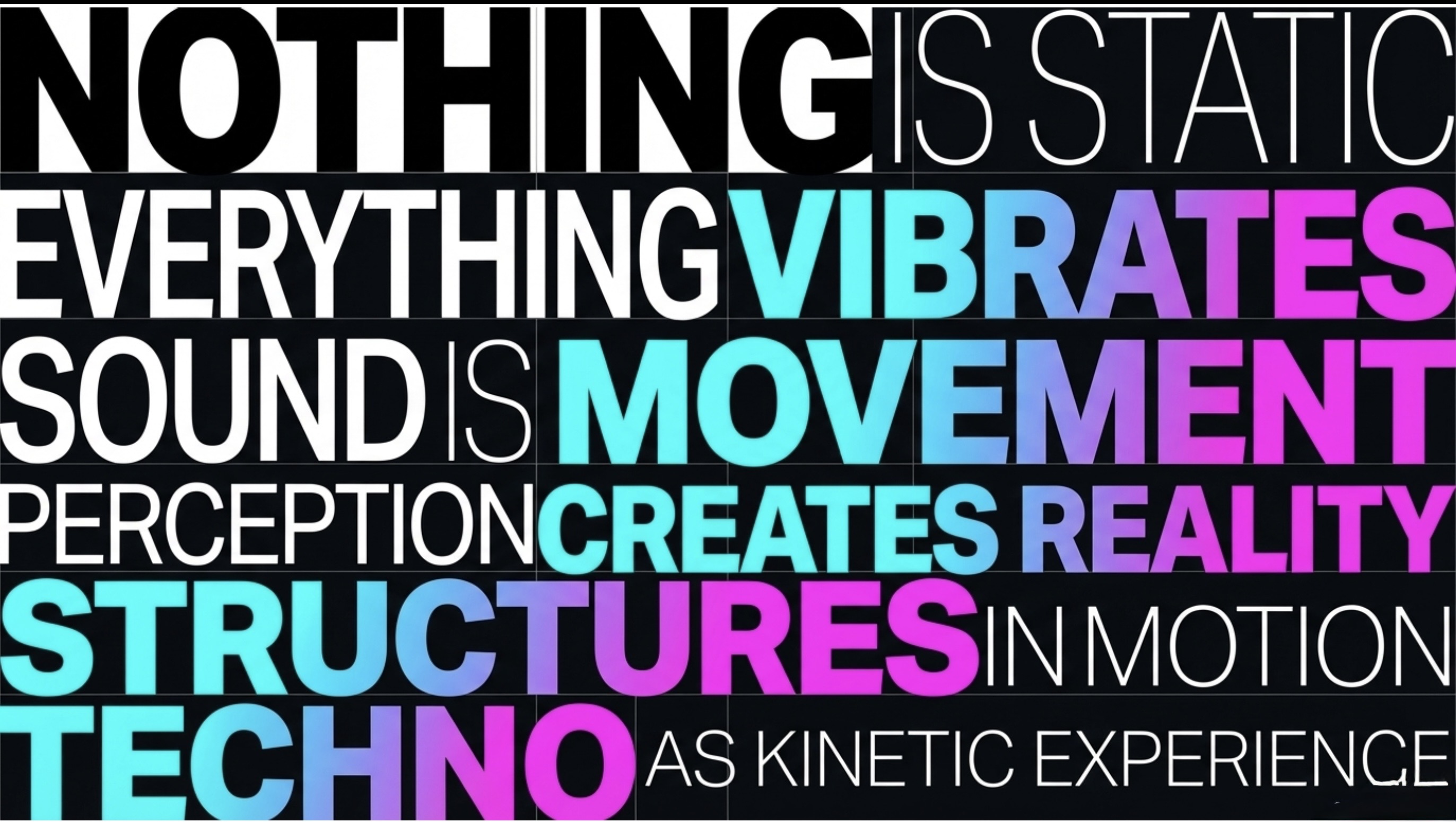
Inspired by Latin American kinetic art — Cruz-Diez, Soto. Nothing is static. Everything vibrates.
Nothing remains fixed.
Everything transforms.
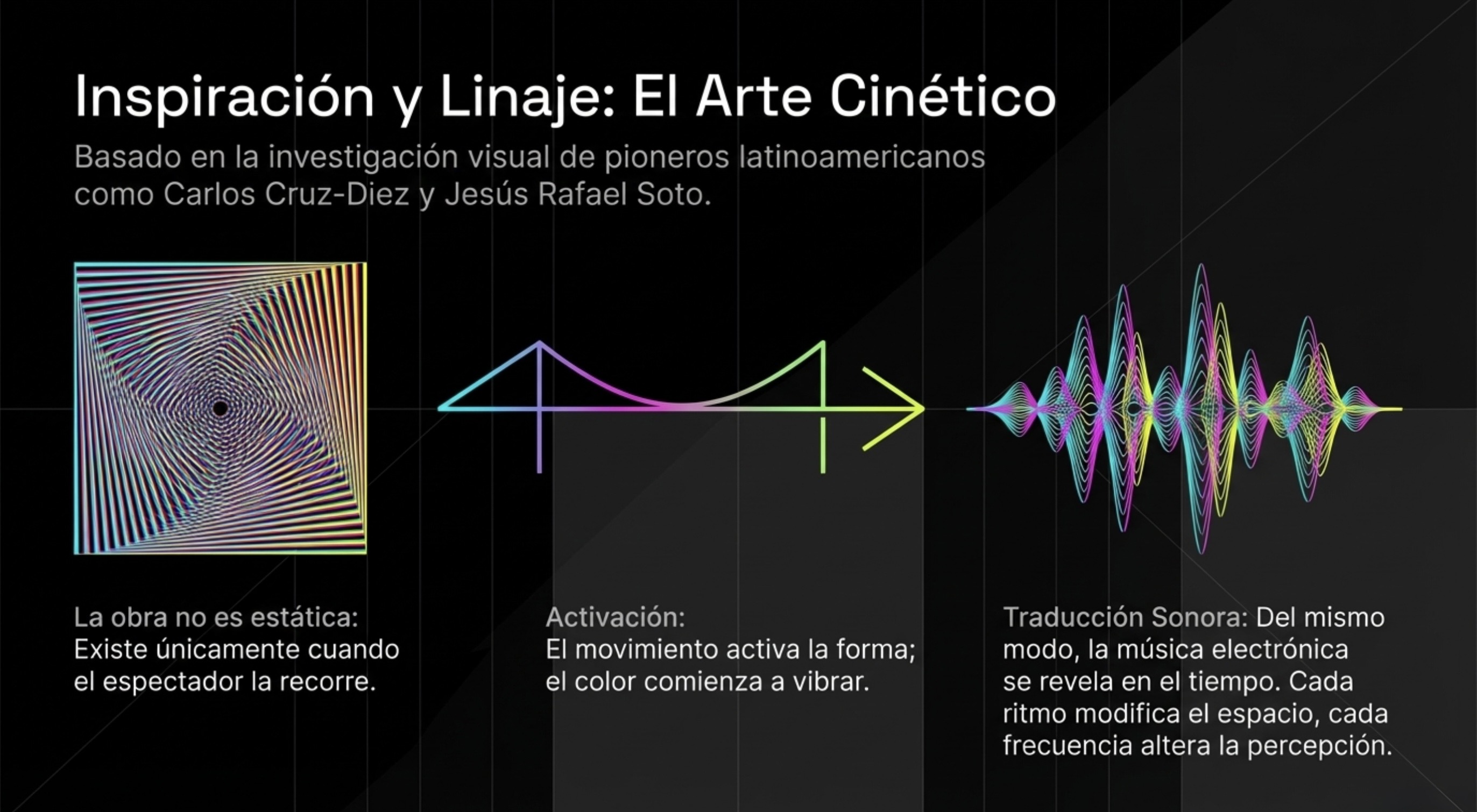
Sound is no longer a fixed structure — it becomes a perceptual experience. Inspired by Latin American kinetic art: Cruz-Diez, Soto. The work exists only when perceived and traversed. In techno, every frequency modifies space. Every rhythm alters perception.
Music is not an object. It is a process. A vibration that transforms the space it inhabits.
Rhythm is not a pattern. It is a geometry that alters perception through the accumulation of cycles.
The listener is not a passive receiver. They are an active part of the sonic circuit — the final variable that completes the equation.
Kinetic art.
Latin American legacy.
Carlos Cruz-Diez and Jesús Rafael Soto built an art philosophy around one truth: nothing is static. Every element vibrates. Color changes based on how you look at it. Space shifts as you move through it.
The Kinetic Phase translates this into sound. Each release is a formal experiment — not a music product. A systematic body of techno where perception is the material.
"From static techno to kinetic techno. The paradigm shift in electronic music."
Five structural elements.
The releases.
Each entry is a formal step, not a catalogue item.
MACHINE
Anatomy of Perceptual Techno. A systematic deconstruction of the sonic and visual code — mapping the intersection of rhythm, geometry and perception across four phases.

STRUCTURES
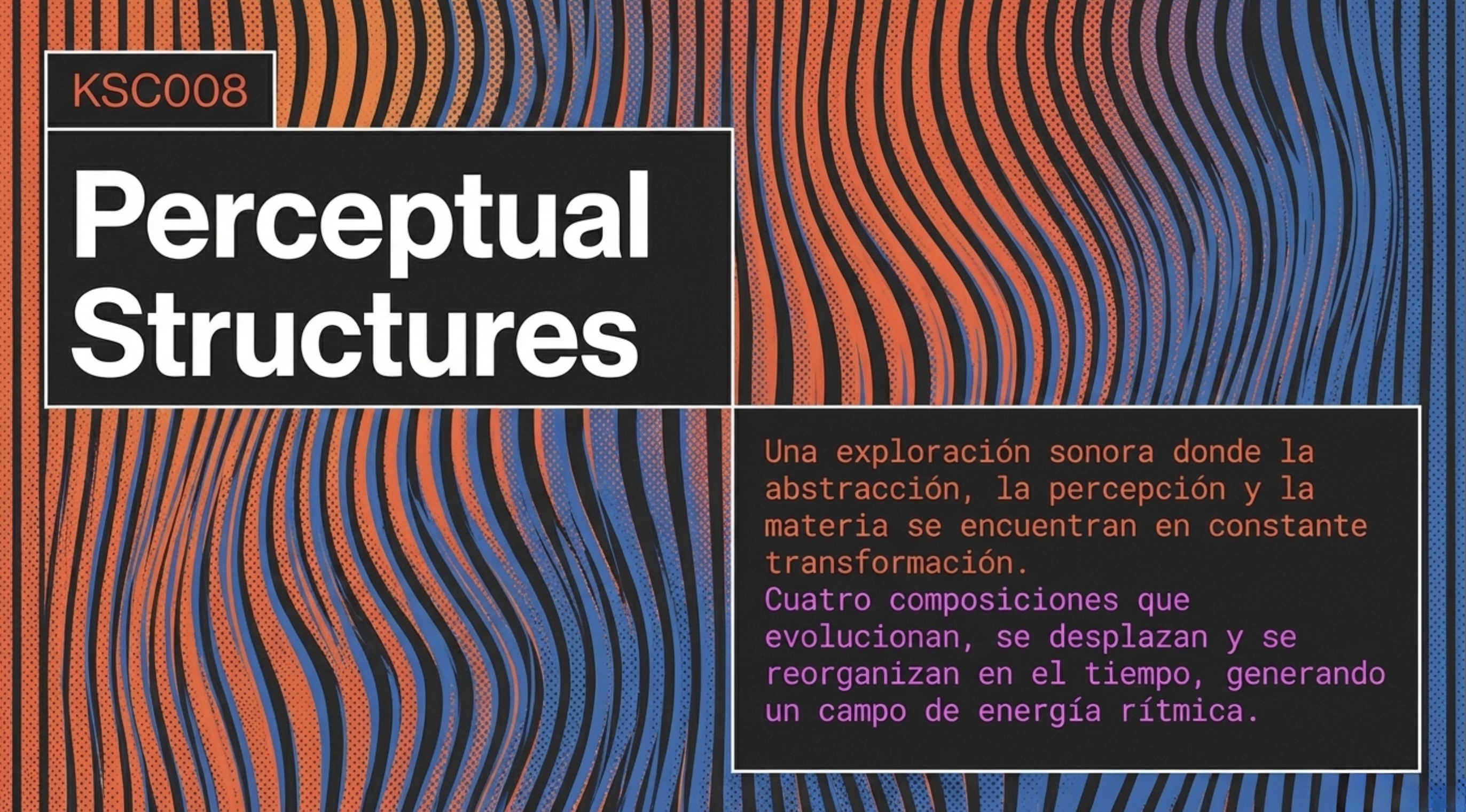
Four sonic structures. A field of rhythmic energy in permanent motion — where abstraction, perception and matter converge. Analogue construction, modular precision.
In development. The phase continues.